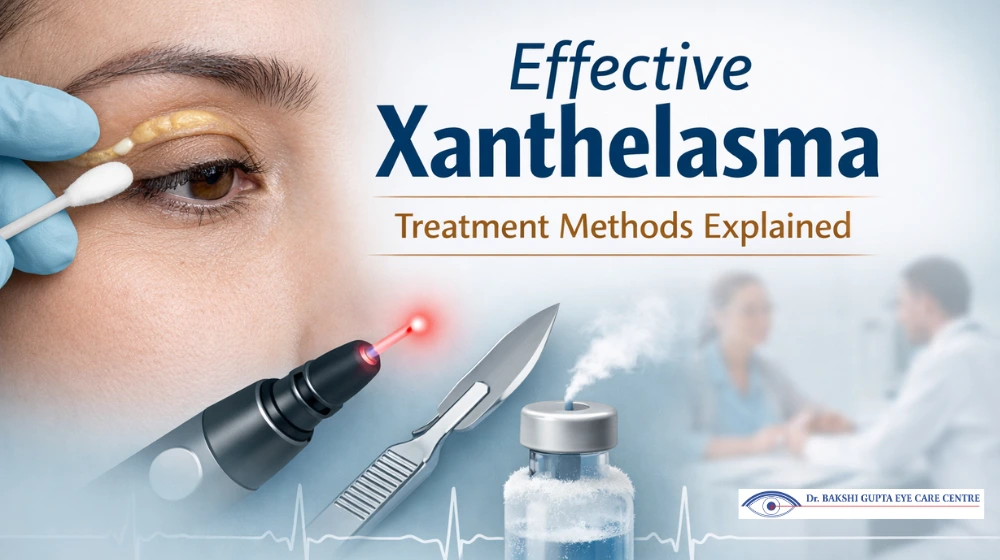
Xanthelasma may look like a small cosmetic issue, but for many people it becomes a long-term concern affecting confidence and eye appearance. If you’re searching for xanthelasma treatment, you’re not alone. These yellowish cholesterol deposits around the eyelids are common and often stubborn. The good news is that modern medical science offers multiple safe and effective solutions. This guide explains xanthelasma treatment options, how doctors choose the right method, and how to get long-lasting results. Whether you are looking for the best xanthelasma treatment or reliable xanthelasma treatment doctors, this blog is designed to answer your questions clearly and practically. What Is Xanthelasma? Xanthelasma are soft, flat, yellow plaques that usually appear on the upper or lower eyelids, especially near the inner corners of the eyes. They are formed due to cholesterol deposits under the skin. While xanthelasma itself is harmless, it can be associated with lipid imbalance or metabolic conditions. Most people seek xanthelasma treatment for cosmetic reasons, but evaluation is important because recurrence is possible if underlying factors are not managed. Why Early Xanthelasma Treatment Matters Many patients delay treatment thinking xanthelasma will fade on its own. Unfortunately, that rarely happens. Early xanthelasma treatment offers several benefits: Consulting experienced xanthelasma treatment doctors early ensures the safest and most effective approach. How Xanthelasma Is Diagnosed Diagnosis is usually clinical. A doctor examines the eyelids and reviews your medical history. In some cases, blood tests are advised to check lipid levels. While diagnosis is straightforward, choosing the best xanthelasma treatment requires professional evaluation. Factors That Decide the Best Xanthelasma Treatment No single xanthelasma treatment suits everyone. Doctors consider: This personalized approach is why choosing qualified xanthelasma treatment doctors is critical. 1. Non-Surgical Xanthelasma Treatment Options Non-surgical xanthelasma treatment options are often the first choice for patients with small, flat, and superficial lesions, especially when the deposits are in the early stages. These methods are ideal for individuals who prefer minimal downtime, want to avoid surgery, or are not suitable candidates for invasive procedures. Under the guidance of experienced xanthelasma treatment doctors, non-surgical treatments can deliver visible improvement with a lower risk profile. Topical Chemical Xanthelasma Treatments Topical chemical therapy is a commonly used non-surgical xanthelasma treatment for mild cases. In this method, specially formulated chemical agents are carefully applied to the affected area to gradually break down cholesterol deposits beneath the skin. Because the eyelid skin is extremely delicate, these treatments must always be performed under strict medical supervision by trained professionals. The chemical solution works by causing controlled damage to the xanthelasma plaque, allowing the body to heal and regenerate healthier skin over time. Multiple sessions may be needed depending on the size and thickness of the lesion. While this approach may not be considered the best xanthelasma treatment for advanced or bulky plaques, it can be highly effective for early-stage xanthelasma. Pros of Topical Chemical Xanthelasma Treatment: Cons of Topical Chemical Xanthelasma Treatment: For patients seeking a conservative approach, topical chemical therapy offers a safe starting point. However, consulting skilled xanthelasma treatment doctors is essential to determine whether this option is appropriate or if more advanced methods such as laser or radiofrequency would provide better and longer-lasting outcomes. 2. Laser Xanthelasma Treatment Laser therapy is one of the most advanced and widely recommended xanthelasma treatment options today. It is often considered the best xanthelasma treatment for mild to moderate eyelid lesions due to its precision and excellent cosmetic results. How Laser Treatment Works A focused laser beam targets the cholesterol deposits and removes them layer by layer without harming the surrounding skin. This controlled approach makes laser a safe and effective xanthelasma treatment for the delicate eyelid area. Benefits of Laser Xanthelasma Treatment Because of these advantages, many xanthelasma treatment doctors prefer laser therapy for predictable and long-lasting results. Recovery After Laser Treatment Laser xanthelasma treatment should always be performed by experienced specialists to ensure safety and avoid complications. 3. Radiofrequency (RF) Ablation for Xanthelasma Treatment Radiofrequency (RF) ablation is a widely used and clinically proven xanthelasma treatment method that uses controlled heat energy to precisely remove cholesterol deposits from the eyelids. This technique works by delivering high-frequency radio waves that generate localized heat, allowing doctors to gently vaporize the xanthelasma tissue layer by layer without affecting the surrounding healthy skin. Because of its accuracy and controlled depth, RF ablation is especially useful for patients who want effective results with minimal downtime. Many xanthelasma treatment doctors recommend RF when lesions are moderately sized and located in sensitive eyelid areas. Advantages of Radiofrequency Xanthelasma Treatment How RF Ablation Works During the procedure, a fine RF probe is used to target the xanthelasma plaque. The heat breaks down the fatty deposits while sealing small blood vessels simultaneously. This reduces bleeding, lowers infection risk, and supports faster healing, making RF a safe and efficient xanthelasma treatment option. 4. Surgical Excision Surgical excision is one of the most effective and definitive xanthelasma treatment options for patients with large, thick, or recurrent eyelid plaques. This method physically removes the cholesterol deposit, making it ideal when other xanthelasma treatment methods such as laser or chemicals are insufficient. When Surgical Xanthelasma Treatment Is Recommended In such situations, surgery may be considered the best xanthelasma treatment for long-term results. Pros of Surgical Xanthelasma Treatment Cons to Consider Surgical xanthelasma treatment should only be performed by experienced xanthelasma treatment doctors with specialized knowledge of eyelid anatomy to ensure safe healing and optimal cosmetic outcomes. 5. Cryotherapy (Freezing Treatment) Cryotherapy is a xanthelasma treatment that removes yellow eyelid plaques by freezing them with liquid nitrogen. Many patients consider this option because it is non-surgical and does not involve cuts or stitches. What Patients Experience The procedure is quick and done in the clinic. A doctor applies liquid nitrogen to the affected area, which may cause brief stinging or burning. After treatment, the skin may turn red, form a small scab, and heal over the next 1–2 weeks. Benefits for Patients Important Limitations Is Cryotherapy Right for You?