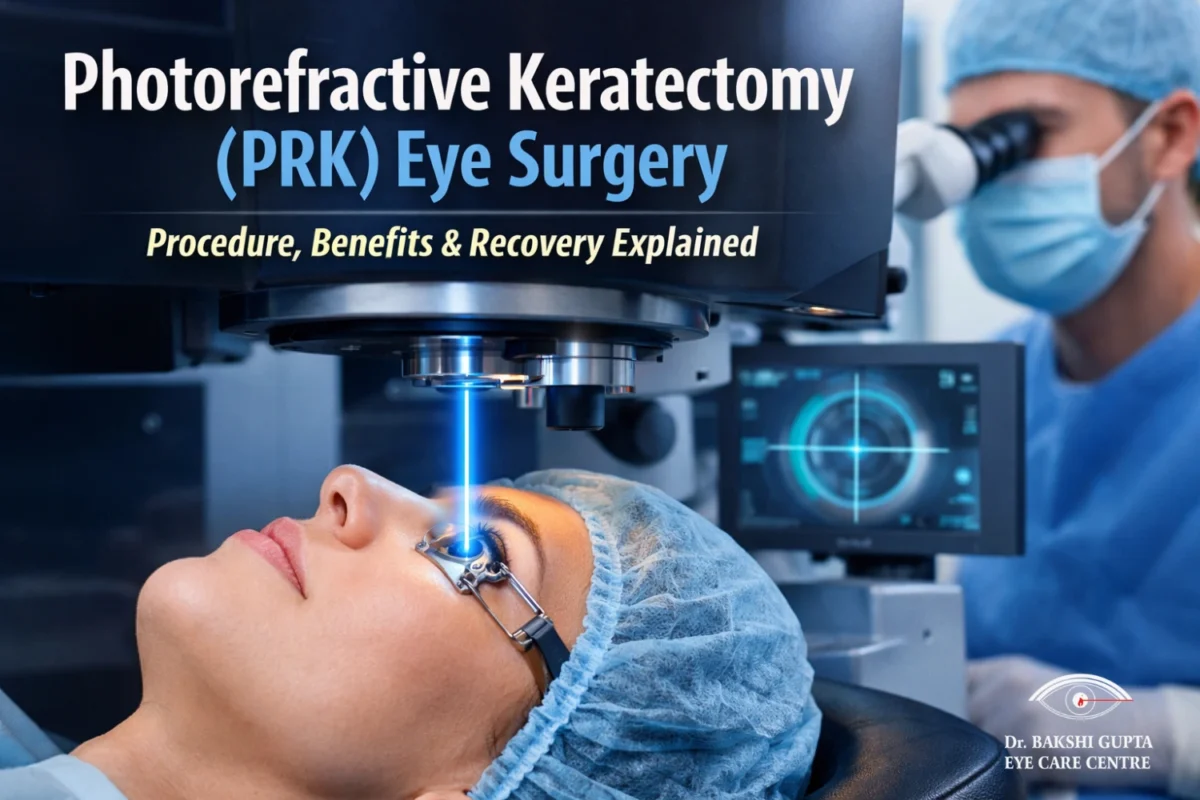
Photorefractive Keratectomy PRK eye surgery is one of the most trusted and time-tested laser vision correction procedures worldwide. Often recommended for patients who are not ideal candidates for LASIK, PRK eye surgery reshapes the cornea to correct refractive errors such as myopia, hyperopia, and astigmatism—without creating a corneal flap. This in-depth guide explains Photorefractive Keratectomy PRK eye surgery in simple, practical terms: how the procedure works, who it’s best for, benefits and risks, recovery expectations, cost considerations, and how advanced PRK eye surgery has evolved. Whether you’re researching PRK laser eye surgery, comparing options, or preparing for consultation, this article is designed to answer your questions clearly and conversationally. What Is Photorefractive Keratectomy (PRK) Eye Surgery? Photorefractive Keratectomy is a type of laser vision correction that uses an excimer laser to reshape the cornea. Unlike LASIK, PRK does not involve cutting a corneal flap. Instead, the thin outer layer of the cornea (the epithelium) is gently removed, allowing the laser to directly reshape the corneal surface. Because there’s no flap, PRK corrective eye surgery is often recommended for patients with thin corneas, dry eyes, or certain corneal irregularities. The epithelium naturally regenerates within a few days after surgery, restoring the eye’s protective surface. Key takeaway: Photorefractive Keratectomy PRK eye surgery is safe, effective, and especially suitable for patients who need surface-based laser correction. How Does PRK Eye Surgery Work? During laser PRK eye surgery, the surgeon carefully removes the corneal epithelium using a specialized solution, brush, or laser. An excimer laser then reshapes the cornea based on your unique prescription. This precise reshaping helps light focus correctly on the retina, improving vision. Once the laser treatment is complete, a soft bandage contact lens is placed over the eye to protect it while the epithelium heals. Vision gradually improves over the following days and weeks. PRK Eye Surgery vs LASIK: What’s the Difference? Patients often ask whether PRK laser eye surgery is better than LASIK eye surgery. The truth is, both are effective—but suitable for different eye conditions. PRK has been around longer than LASIK and remains a gold-standard option, especially in advanced PRK eye surgery cases where corneal stability is a priority. Who Is an Ideal Candidate for PRK Corrective Eye Surgery? You may be a good candidate for Photorefractive Keratectomy PRK eye surgery if you: PRK is also sometimes combined with other surface techniques in specialized conditions, including Keratoconus PRK laser eye surgery, under strict clinical protocols. Types of PRK and Related Procedures Photorefractive keratectomy PRK eye surgery is not a one-size-fits-all treatment. Depending on your eye condition, corneal structure, and vision goals, different types of PRK and related laser procedures may be recommended. Below are the most common and clinically proven options. 1. Standard PRK Eye Surgery Standard PRK eye surgery is the most commonly performed form of PRK corrective eye surgery. It is designed to correct routine refractive errors such as myopia (nearsightedness), hyperopia (farsightedness), and astigmatism using surface ablation. In this procedure, the corneal epithelium is gently removed, and an excimer laser reshapes the underlying corneal tissue to improve how light focuses on the retina. Standard PRK is ideal for patients with stable vision and healthy corneas who may not qualify for LASIK due to thin corneal thickness or dry eye concerns. 2. Advanced PRK Eye Surgery Advanced PRK eye surgery uses next-generation laser technology to provide highly personalized vision correction. Instead of applying a standard correction pattern, wavefront-guided or topography-guided lasers map tiny imperfections in your eye and customize the treatment accordingly. This approach enhances visual clarity, reduces glare and halos, and improves night vision outcomes. Advanced PRK eye surgery is especially beneficial for patients with higher prescriptions, irregular corneal surfaces, or previous refractive surgery complications. 3. PTK Eye Surgery PTK eye surgery (Phototherapeutic Keratectomy) is a therapeutic laser procedure rather than a refractive one. Unlike PRK eye surgery, PTK does not aim to correct vision power. Instead, it treats corneal surface conditions such as scars, opacities, recurrent corneal erosion, and certain dystrophies. PTK uses the same excimer laser technology to precisely remove damaged corneal tissue, helping restore corneal smoothness and improve visual quality. In some cases, PTK may be combined with PRK laser eye surgery if refractive correction is also needed. 4. Keratoconus PRK Laser Eye Surgery Keratoconus PRK laser eye surgery is performed only in carefully selected patients with mild and stable keratoconus. This specialized approach is typically combined with corneal collagen cross-linking to strengthen the cornea and prevent further progression of the condition. The goal is not complete vision correction but meaningful visual improvement and enhanced corneal stability. When performed by experienced surgeons using strict protocols, keratoconus PRK laser eye surgery can reduce dependence on glasses or contact lenses while preserving long-term eye health. Step-by-Step PRK Laser Eye Surgery Procedure 1. Pre-operative assessment Before photorefractive keratectomy PRK eye surgery, a detailed eye evaluation is performed. This includes measuring corneal thickness, mapping corneal topography, checking pupil size, and confirming vision stability. These tests ensure that PRK eye surgery is safe, accurate, and customized to your eyes. 2. Numbing drops applied On the day of PRK laser eye surgery, anesthetic eye drops are administered to completely numb the eyes. This ensures you remain comfortable throughout the procedure, with no pain during the laser treatment. 3. Epithelium removal The thin outer layer of the cornea, called the epithelium, is gently removed using a specialized solution or instrument. Since PRK is a surface-based procedure, no corneal flap is created, making prk corrective eye surgery ideal for patients with thin corneas. 4. Laser reshaping An advanced excimer laser precisely reshapes the cornea to correct refractive errors such as myopia, hyperopia, or astigmatism. The laser treatment usually takes only a few seconds per eye, guided by your personalized vision data. 5. Bandage lens placement After laser reshaping, a soft bandage contact lens is placed on the eye. This protective lens promotes healing, reduces discomfort, and allows the epithelium to regenerate naturally over the next few days. 6.