
How AI & Robotics Advancing Modern Refractive Eye Surgery
The world of refractive eye surgery has evolved dramatically in the last decade. What began as standard LASIK procedures has now transformed into a new era powered by AI in eye surgery, robotic precision, and next-generation femtosecond laser technology. These innovations are redefining vision correction by offering higher accuracy, customized treatment plans, faster recovery, and significantly improved patient outcomes.
For clinics like Gupta Eye & Dental Care in Panchkula, where advanced technology is already part of everyday practice, AI-driven innovation represents a major leap forward for delivering precise, safe, and efficient refractive procedures.
Whether you’re considering LASIK, SMILE, PRK, or ICL implants, understanding how these technologies work can help you make better, informed decisions.
What Is Refractive Eye Surgery?
Refractive surgery corrects common vision problems, including:
- Myopia (nearsightedness)
- Hyperopia (farsightedness)
- Astigmatism
- Presbyopia
Traditional laser surgery reshaped the cornea using standardized laser profiles. Today, AI-powered diagnostics, robotic laser systems, and corneal mapping technology deliver unprecedented personalization for every patient.
This shift leads to sharper vision, fewer side effects, and better long-term stability.
How AI Is Transforming Modern Refractive Eye Surgery
Artificial Intelligence is now involved in nearly every stage of refractive treatment—from screening to post-surgery monitoring.
Here’s how AI is elevating accuracy, safety, and efficiency.
1. AI-Powered Diagnostics: The Foundation of Safer Surgery
One of the biggest game changers is the use of AI in pre-operative screening.
AI systems now:
- Analyze thousands of data points from corneal topography, tomography, and OCT
- Detect early keratoconus or irregular corneal patterns
- Predict refractive stability
- Assess suitability for LASIK, SMILE, PRK, or ICL
These advanced screening tools significantly reduce the risk of post-operative complications.
For clinics, adopting AI-driven diagnostics provides more accurate results and ensures the safest refractive surgery decisions.
2. Personalized Laser Profiles Using Machine Learning
One of the biggest advantages of AI is hyper-personalization.
Machine learning models create customized laser eye surgery profiles based on:
- Corneal curvature pattern
- Tear film quality
- Wavefront aberrations
- Optical zone calculations
- Low-light pupil behavior
This ensures every patient gets a treatment tailored to their exact eye anatomy, resulting in:
- Enhanced night vision
- Reduced halos and glare
- Better long-term clarity
- Minimal tissue removal
This is why AI-assisted LASIK surgery with AI often outperforms traditional refractive corrections.
3. Predictive AI Models Improve Surgical Outcomes
AI doesn’t just assist; it predicts.
Using historical data and machine learning, AI can forecast:
- Expected visual outcome
- Healing duration
- Regression possibility
- Dry-eye likelihood
- Suitability for advanced procedures like SMILE surgery or ICL implant
Predictive analytics help both surgeons and patients understand the best possible approach.
4. Real-Time Monitoring with AI-guided Laser Systems
During the procedure, AI ensures active safety.
AI-assisted laser machines monitor:
- Eye movement
- Corneal flap alignment
- Tissue response
- Rotational tracking
- Laser focus adjustments
If the patient blinks or the eye shifts even microscopically, the robotic system adjusts within milliseconds.
This results in:
- More precise corneal reshaping
- Minimized risk
- Faster, smoother procedures
Today’s most advanced machines for LASIK, PRK, and SMILE use this technology consistently.
Robotics: The Future of High-Precision Eye Surgery
While AI handles analysis and data interpretation, robotics brings unmatched surgical accuracy.
Robotic laser systems are transforming refractive eye surgery in four major ways:
1. Flap Creation & Corneal Incisions with Robotic Lasers
Robotic-guided femtosecond lasers:
- Create uniform LASIK flaps
- Perform bladeless corneal incisions
- Improve safety over manual tools
- Enhance predictability
Robotics allows for micron-level precision—surpassing human limitations.
2. SMILE Surgery: Robotic Vision Correction Innovation
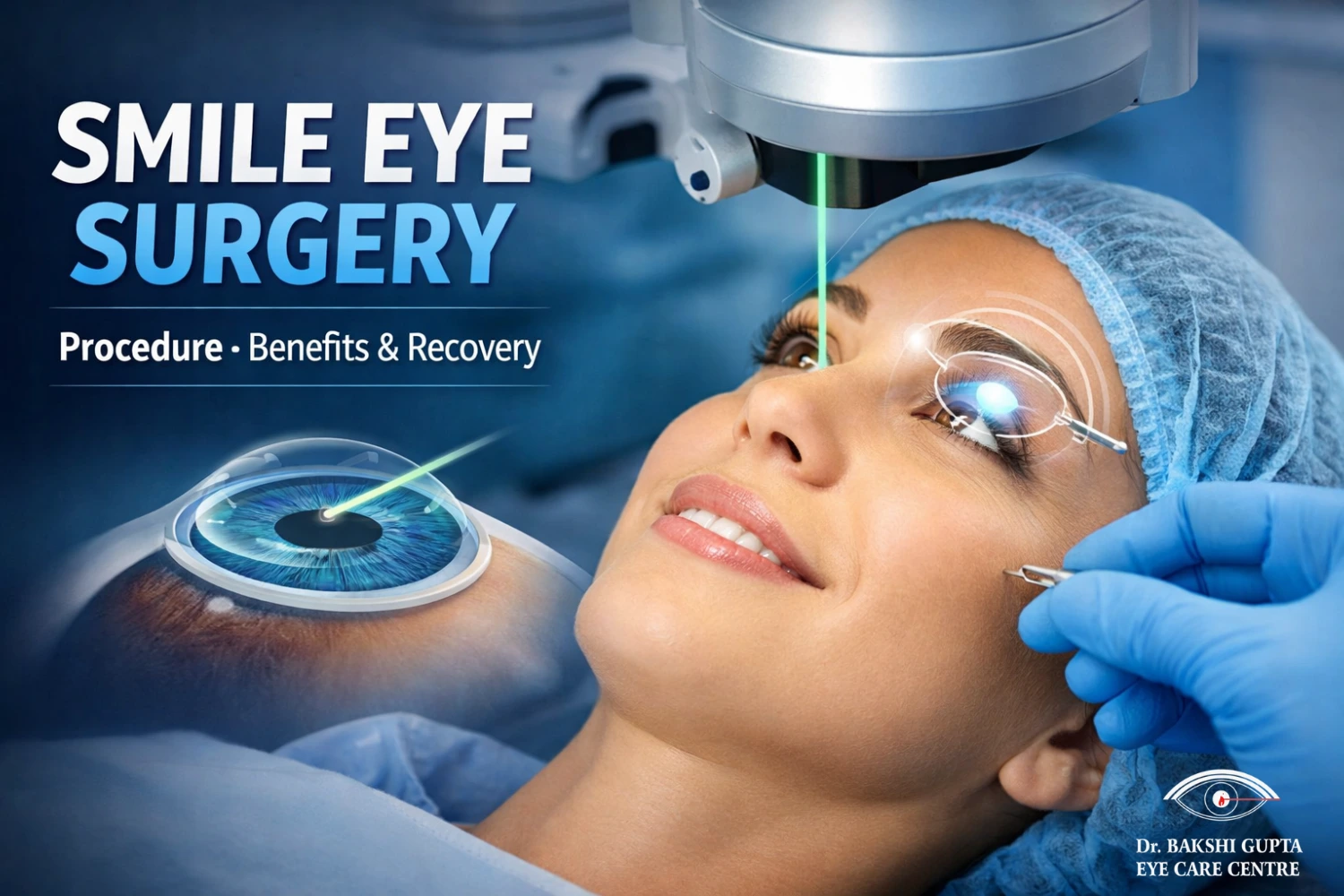
SMILE (Small Incision Lenticule Extraction) is one of the most advanced robotic eye surgeries available.
Key features:
- No flap
- 2 mm tiny incision
- Minimal dryness
- Fast healing
- High accuracy for high myopia
SMILE laser eye surgery technology relies heavily on robotic execution and AI mapping for perfect lenticule creation.
3. Robotic Eye Tracking Enhances Laser Accuracy
Modern refractive systems track the eye over 1,000 times per second.
These robotic eye trackers detect:
- Horizontal movement
- Vertical movement
- Cyclotorsional rotation
- Micro tremors
The laser only fires when alignment is perfect. This is essential for patients with anxiety, blinking issues, or involuntary movements.
4. Robotics in ICL Surgery
In ICL (Implantable Collamer Lens) procedures, robotics aids in:
- Vault prediction
- Accurate lens placement
- Real-time depth guidance
This reduces the chance of lens rotation and improves long-term clarity.
Benefits of AI & Robotics for Patients
Here’s why more patients prefer AI-assisted refractive surgery:
1. Faster surgeries (5–10 minutes per eye)
2. Quicker recovery (often within 24 hours)
3. Higher precision and safety
4. Less dryness after surgery
5. Improved night vision outcomes
6. More people eligible for vision correction
7. Long-term stability with predictive AI models
For patients searching for advanced refractive eye surgery in Panchkula, these technologies offer more peace of mind and superior results.
Future Innovations: What’s Next for Refractive Surgery?
The next decade will bring even more exciting advancements like:
- Fully autonomous robotic eye surgery
- AI predicting visual outcomes 10–20 years ahead
- Smart lasers adjusting in real time
- Neural-based modeling for presbyopia
- AI-enabled tele-ophthalmology
These breakthroughs will transform eye hospitals and clinics worldwide, including centers like Gupta Eye & Dental Care, known for adopting modern technology early.
FAQs
1. Is AI used in refractive eye surgery?
Yes. AI is used to analyze corneal data, personalize treatments, predict outcomes, and guide laser precision in real time.
2. Is robotic eye surgery safer than manual procedures?
Absolutely. Robotic precision reduces human error and improves consistency, flap creation, and incision accuracy.
3. What is the best AI-assisted laser eye surgery?
Procedures like AI-optimized LASIK, robotic SMILE, and AI-guided PRK offer excellent results depending on eye conditions.
4. How long is recovery after AI-assisted LASIK or SMILE?
Most patients return to daily activities within 24 hours due to minimal tissue disruption and enhanced precision.
5. Where can I get advanced refractive eye surgery in Panchkula?
Clinics like Gupta Eye & Dental Care offer state-of-the-art laser, AI-based diagnostics, and modern refractive treatments.
Conclusion
AI and robotic innovations are transforming refractive eye surgery by making treatments safer, faster, and far more precise. With AI-driven diagnostics, customized laser profiles, and robotic accuracy in LASIK and SMILE, patients enjoy clearer vision and quicker recovery. For anyone considering advanced refractive eye surgery in Panchkula, choosing a modern, technology-equipped clinic ensures the best possible results and long-term visual stability.