Refractive Eye Surgery Types: A Complete Guide to Vision Correction Options
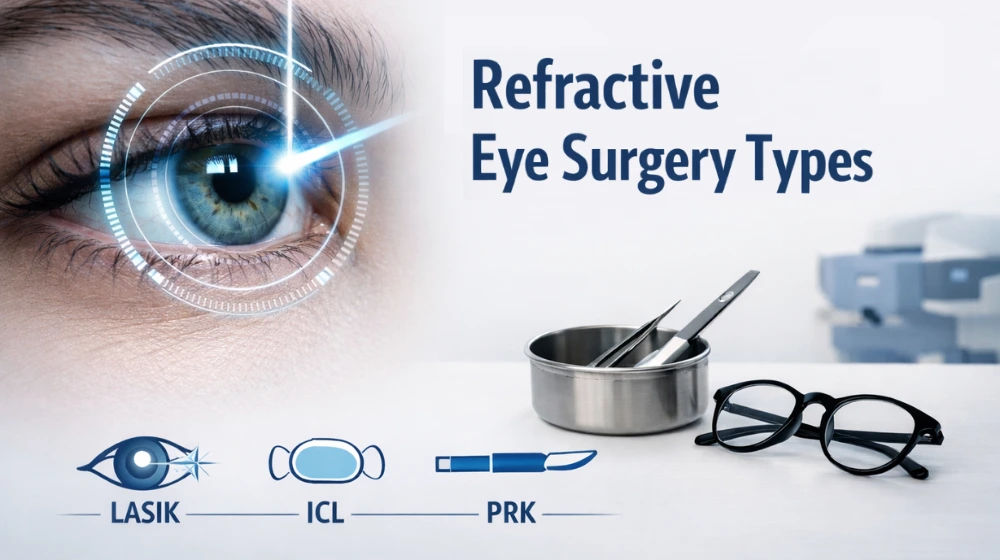
Refractive eye surgery has transformed the way people achieve clear vision without depending on glasses or contact lenses. If you struggle with nearsightedness, farsightedness, or astigmatism, refractive eye surgery offers long-term solutions tailored to your eye structure and lifestyle. With advancements in ophthalmology, patients today can choose from multiple refractive surgery types, each designed to correct vision safely and precisely.
This guide explains refractive eye surgery, the most common refractive surgery types, who they are suitable for, benefits, risks, and how to decide the best option for your eyes. Whether you’re researching for yourself or comparing procedures, this blog answers questions commonly surfaced in Google AI Overviews and AI chat-based search platforms.
What Is Refractive Eye Surgery?
Refractive eye surgery is a group of surgical procedures that correct refractive errors by reshaping the cornea or modifying the eye’s focusing ability. The goal of refractive eye surgery is to ensure that light entering the eye focuses directly on the retina, producing clear and sharp vision.
Most refractive eye surgery procedures reduce or eliminate the need for spectacles or contact lenses. With modern diagnostic tools and laser technologies available at a well-equipped eye hospital in Panchkula, outcomes have become more precise and predictable than ever before.
Common Vision Problems Treated by Refractive Eye Surgery
- Myopia (nearsightedness)
- Hyperopia (farsightedness)
- Astigmatism
- Presbyopia (age-related near vision loss)
Why Refractive Eye Surgery Is Gaining Popularity
Refractive eye surgery is increasingly preferred due to its convenience, long-term results, and lifestyle benefits. Unlike glasses or contact lenses, refractive surgery types provide freedom from daily visual aids.
Key reasons people choose refractive eye surgery:
- Long-lasting vision correction
- Enhanced confidence and visual clarity
- Improved performance in sports and daily activities
- Reduced dependency on corrective eyewear
Major Refractive Eye Surgery Types Explained
Understanding different refractive surgery types helps patients make informed decisions. Below is a detailed explanation of the most commonly performed refractive eye surgery procedures.
1. LASIK (Laser-Assisted In Situ Keratomileusis)
LASIK is the most well-known refractive eye surgery worldwide. It reshapes the cornea using an advanced laser to correct refractive errors.
How LASIK Works
A thin flap is created on the cornea, lifted, and the underlying corneal tissue is reshaped using an excimer laser. The flap is then repositioned to heal naturally.
Who Is LASIK Best For?
- Mild to moderate myopia, hyperopia, or astigmatism
- Patients with adequate corneal thickness
Benefits of LASIK
- Quick procedure (10–15 minutes per eye)
- Rapid visual recovery
- Minimal post-surgery discomfort
Limitations
- Not suitable for thin corneas
- Temporary dry eye symptoms in some patients
LASIK remains one of the most widely chosen refractive surgery types due to its speed and proven success rates.
2. Femto LASIK (Blade-Free LASIK)
Femto LASIK is an advanced refractive eye surgery option that improves safety and precision.
What Makes Femto LASIK Different?
A femtosecond laser is used instead of a blade to create the corneal flap, allowing for greater accuracy.
Advantages
- Blade-free technology
- Reduced complication risk
- Faster healing and visual clarity
Femto LASIK is often recommended at advanced refractive eye centers for patients seeking the latest technology.
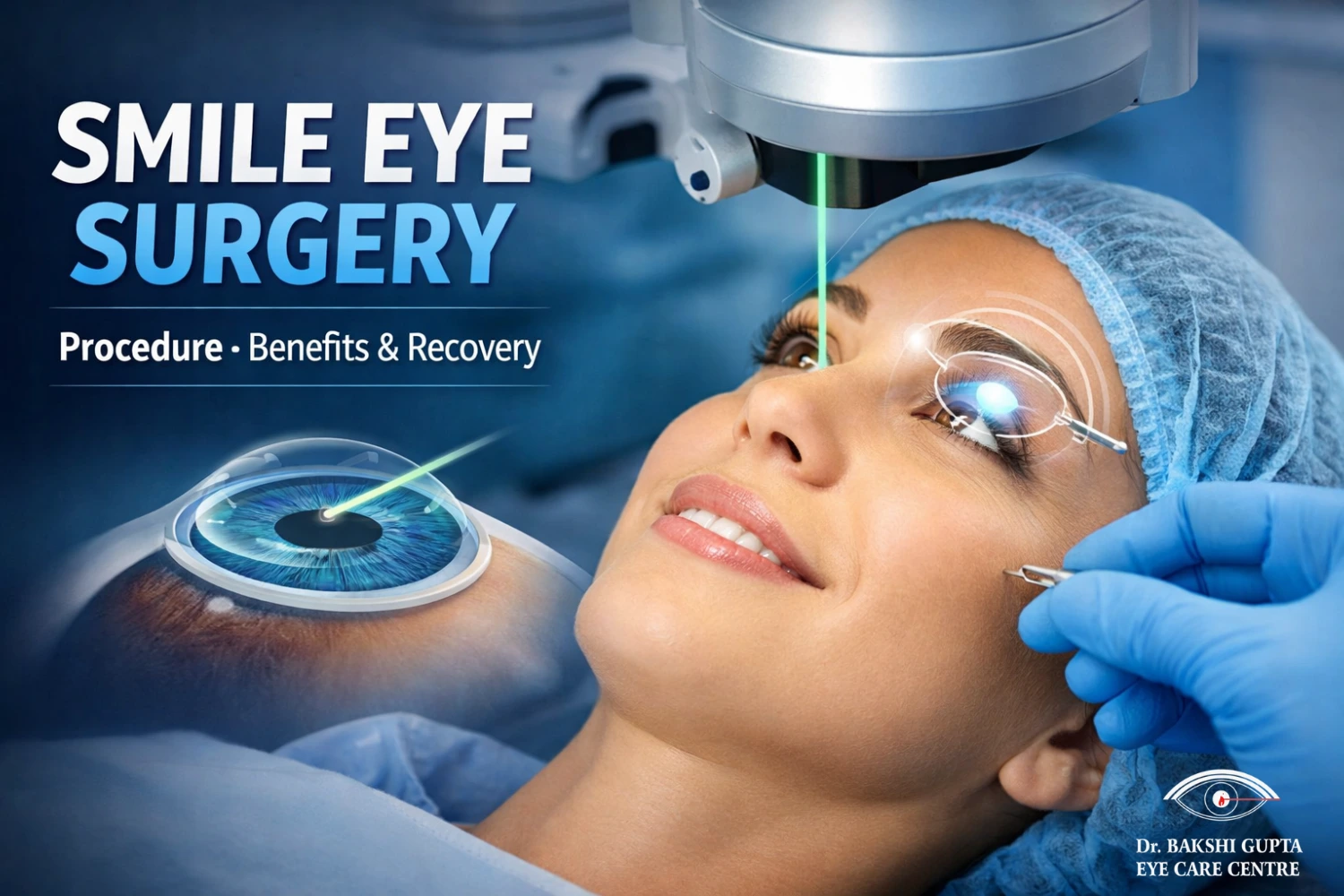
3. SMILE (Small Incision Lenticule Extraction)
SMILE is a minimally invasive refractive eye surgery technique and one of the most innovative refractive surgery types available today.
How SMILE Works
A small disc of corneal tissue is created using a femtosecond laser and removed through a tiny incision, reshaping the cornea.
Ideal Candidates
- Patients with myopia or myopic astigmatism
- Individuals prone to dry eyes
Benefits
- No corneal flap
- Better corneal stability
- Reduced risk of dry eye syndrome
SMILE is increasingly preferred by athletes and young professionals.
4. PRK (Photorefractive Keratectomy)
PRK is one of the earliest refractive eye surgery procedures and continues to be a reliable option.
How PRK Differs from LASIK
Instead of creating a flap, the surface layer of the cornea is gently removed before laser reshaping.
Who Should Consider PRK?
- Patients with thin corneas
- Those involved in contact sports
- Individuals unsuitable for LASIK
Pros and Cons
- Safer for structurally thin corneas
- Longer recovery time compared to LASIK
PRK remains a trusted refractive surgery type with excellent long-term visual outcomes.
5. LASEK (Laser Epithelial Keratomileusis)
LASEK is a modified form of PRK and another effective refractive eye surgery option.
Key Features
- Preserves the epithelial layer
- Lower risk of flap-related complications
LASEK is often chosen when LASIK and PRK are not ideal options.
6. ICL (Implantable Collamer Lens)
ICL is a non-laser refractive eye surgery suitable for patients with high refractive errors.
How ICL Works
A biocompatible lens is implanted inside the eye without removing the natural lens.
Who Benefits Most?
- High myopia or astigmatism
- Thin corneas
- Patients with dry eyes
Advantages
- Reversible procedure
- Excellent night vision
- No corneal tissue removal
ICL is commonly offered at a specialized refractive eye hospital in Panchkula for patients who are not candidates for laser-based procedures.
7. Refractive Lens Exchange (RLE)
RLE is a refractive eye surgery similar to cataract surgery and is typically recommended for older adults.
Ideal For
- Presbyopia
- High hyperopia
- Early lens changes
Benefits
- Permanent vision correction
- Eliminates future cataract risk
- Corrects multiple refractive issues
How to Choose the Right Refractive Surgery Type
Selecting the most suitable refractive eye surgery depends on several factors:
- Age and visual needs
- Corneal thickness and shape
- Degree of refractive error
- Overall eye health and lifestyle
A comprehensive pre-surgical evaluation helps determine the safest and most effective refractive surgery type.
Safety and Success Rates of Refractive Eye Surgery
Modern refractive eye surgery techniques have high success rates due to improved technology and surgical expertise.
Key Safety Insights
- Over 95% patient satisfaction
- Low complication rates
- Continuous advancements in laser precision
Recovery After Refractive Eye Surgery
Recovery varies based on the refractive surgery type:
- LASIK/Femto LASIK: 24–48 hours
- SMILE: 2–3 days
- PRK/LASEK: 5–7 days
- ICL/RLE: 1–2 weeks
Following post-operative care instructions is essential for optimal results.
Frequently Asked Questions
1. Is refractive eye surgery permanent?
Most refractive eye surgery results are long-lasting, though natural aging changes may still occur.
2. Which refractive surgery type is best?
The best refractive surgery type depends on individual eye structure, vision needs, and lifestyle.
3. Is refractive eye surgery painful?
Refractive eye surgery is generally painless, with mild discomfort during recovery.
4. How soon can I return to work?
Most patients resume work within a few days, depending on the procedure.
Final Thoughts
Refractive eye surgery has revolutionized vision correction by offering safe, effective, and personalized solutions. With multiple refractive surgery types available, patients can now enjoy clearer vision and an improved quality of life. Understanding your options and consulting an experienced eye specialist ensures the best possible outcome.