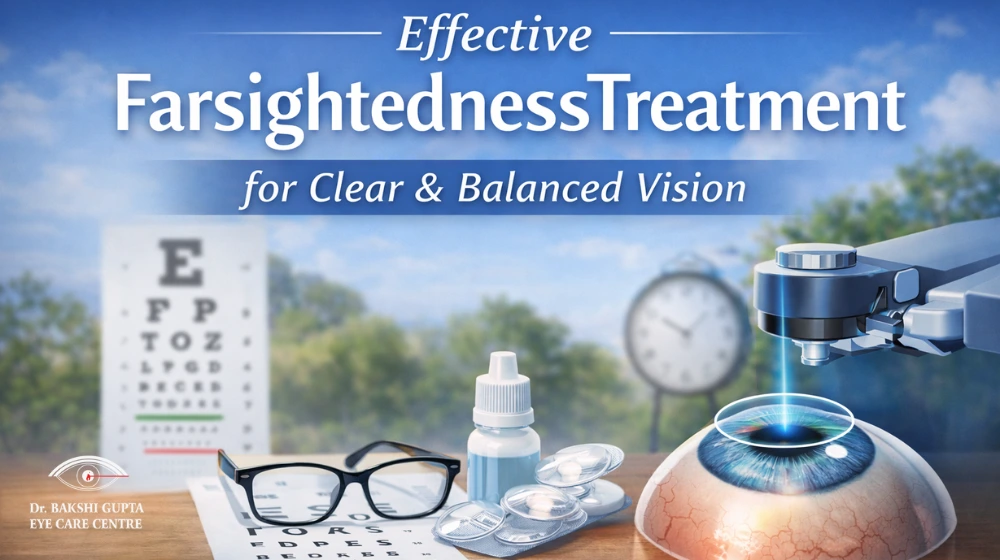
Farsightedness treatment is essential for anyone who struggles with clear near vision, frequent eye strain, or headaches while reading or using digital devices. Clinically known as hyperopia, farsightedness occurs when light entering the eye focuses behind the retina instead of directly on it. This leads to difficulty seeing objects up close, while distant vision may remain relatively clear—especially in younger people.
If left unmanaged, farsightedness can interfere with daily tasks, work productivity, learning, and overall quality of life. Fortunately, modern far sighted treatment options range from non-invasive solutions like glasses to advanced eye surgery for farsightedness that can offer long-term freedom from corrective lenses. This comprehensive guide explains causes, symptoms, diagnosis, medicines, lifestyle strategies, and the best eye surgery for farsightedness, helping you choose the most effective path to clear and balanced vision.
What is Farsightedness (Hyperopia)
Farsightedness happens when the eyeball is too short or the cornea has too little curvature. As a result, incoming light doesn’t bend enough and focuses behind the retina. Children and young adults can sometimes compensate by using eye muscles to focus, but this constant effort often causes fatigue.
Common Causes
- Genetic predisposition
- Shorter-than-normal eyeball
- Flatter cornea or lens
- Age-related changes reducing focusing ability
Signs and Symptoms
- Blurry near vision
- Eye strain after reading
- Headaches, especially after screen use
- Squinting to focus
- Difficulty concentrating on close tasks
Early diagnosis is critical, as the right farsightedness treatment can prevent worsening symptoms and long-term discomfort.
How Farsightedness Is Diagnosed
An eye care professional performs a comprehensive eye exam that may include:
- Visual acuity testing
- Refraction test to determine lens power
- Retinal examination
- Cycloplegic refraction (to relax focusing muscles)
Accurate diagnosis ensures the most suitable far sighted treatment, whether non-surgical or surgical.
Non-Surgical Farsightedness Treatment Options
1. Prescription Glasses
Glasses are the most common farsightedness treatment and work by adjusting how light enters the eye. Convex lenses help focus images directly onto the retina.
Pros:
- Safe and non-invasive
- Cost-effective
- Ideal for all ages
Cons:
- Dependence on eyewear
- May be inconvenient for sports or outdoor activities
2. Contact Lenses
Contact lenses offer a wider field of vision and cosmetic appeal. They are available in daily, monthly, and multifocal options.
Pros:
- Natural vision correction
- No frame obstruction
Cons:
- Requires hygiene and maintenance
- Not suitable for everyone
3. Medicine for Farsightedness
There is no permanent medicine for farsightedness that can correct eye structure. However, medications may help relieve symptoms:
- Lubricating eye drops for dryness
- Anti-inflammatory drops for irritation
- Nutritional supplements supporting eye health
These medicines complement other farsightedness treatment options but do not replace corrective lenses or surgery.
Lifestyle and Natural Support for Far Sighted Treatment
While they cannot cure hyperopia, healthy habits support eye comfort:
- Follow the 20-20-20 rule for screen use
- Maintain proper lighting while reading
- Eat a diet rich in vitamin A, lutein, and omega-3s
- Get regular eye check-ups
Such habits enhance overall eye health and support long-term far sighted treatment success.
Eye Surgery for Farsightedness
For those seeking freedom from glasses or contacts, eye surgery options for farsightedness can permanently reshape how the eye focuses light.
Who Is a Good Candidate?
You may qualify for far sighted eye surgery if you:
- Are over 18 years old
- Have stable vision for at least one year
- Have healthy corneas
- Do not have severe dry eye or eye disease
Types of Farsighted Corrective Eye Surgery
1. LASIK for Farsightedness
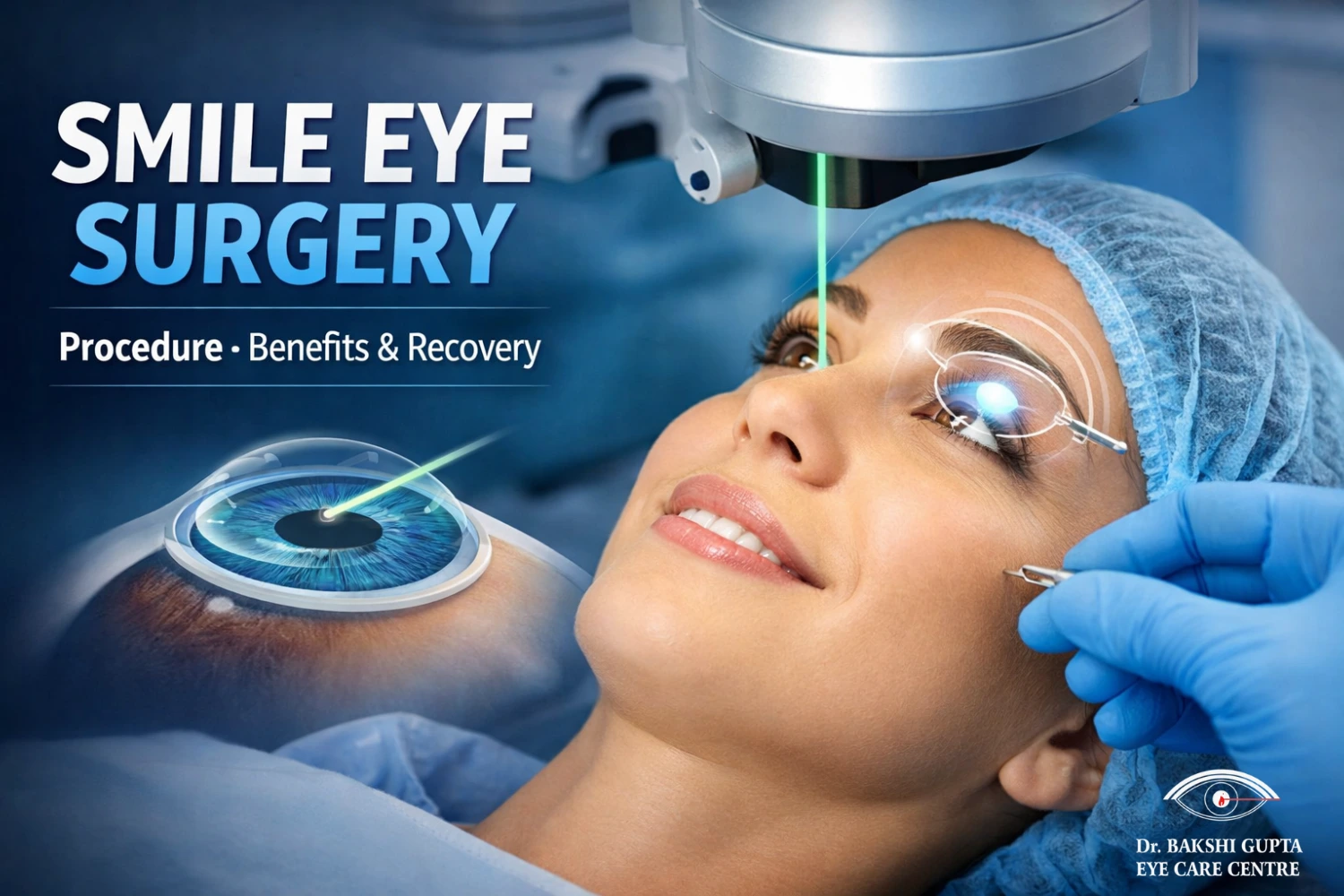
LASIK is one of the most popular and widely performed options in modern farsightedness treatment. This advanced laser procedure works by precisely reshaping the cornea so that light entering the eye focuses correctly on the retina, improving near vision and overall clarity. For many patients, LASIK offers a long-term alternative to glasses or contact lenses and is often recommended as a reliable far sighted eye surgery option.
During the procedure, a femtosecond laser creates a thin corneal flap. Another laser then reshapes the underlying corneal tissue to correct hyperopia. The flap is repositioned without stitches, allowing the eye to heal naturally. The entire process typically takes less than 15 minutes for both eyes.
Benefits of LASIK for farsightedness include:
- Quick procedure: The surgery is completed within minutes, making it convenient for patients with busy schedules.
- Minimal discomfort: Most patients experience little to no pain during or after the procedure.
- Fast visual recovery: Many people notice clearer vision within 24–48 hours, allowing a rapid return to daily activities.
- Reduced dependence on glasses or lenses: LASIK can significantly decrease or eliminate the need for corrective eyewear.
Limitations of LASIK:
- Not suitable for thin corneas: Patients with insufficient corneal thickness may need alternative eye surgery options for farsightedness.
- Temporary side effects: Mild dryness, glare, or halos may occur during the initial healing phase.
- Age and stability requirements: Vision must be stable, and patients are usually advised to be over 18 years of age.
Because of its high success rate, safety profile, and long-term results, LASIK is often regarded as one of the best eye surgeries for farsightedness for eligible candidates seeking a permanent and effective solution.
2. PRK (Photorefractive Keratectomy)
PRK (Photorefractive Keratectomy) is a well-established farsighted corrective eye surgery that reshapes the cornea to improve how light focuses on the retina. Unlike LASIK, PRK does not create a corneal flap. Instead, the surgeon gently removes the thin outer layer of the cornea (epithelium) and then uses an advanced laser to reshape the underlying corneal tissue. Over time, the epithelium naturally regenerates, resulting in clearer and more balanced vision.
PRK is often recommended for patients who may not be ideal candidates for LASIK, making it an important eye surgery option for farsightedness, especially in specific clinical situations.
Benefits of PRK for Farsightedness Treatment:
- Highly suitable for people with thin or irregular corneas
- No corneal flap, reducing the risk of flap-related complications
- Proven track record with long-term stable vision results
- Effective in correcting mild to moderate farsightedness
- Ideal for individuals involved in contact sports or physically demanding jobs
Because PRK reshapes the cornea directly, it provides reliable and lasting improvement, making it a trusted far sighted eye surgery option worldwide.
Considerations to Keep in Mind:
- Recovery time is longer than LASIK, usually ranging from a few days to a few weeks
- Temporary discomfort, light sensitivity, or blurry vision may occur during healing
- Vision improvement is gradual rather than immediate
Although PRK requires patience during recovery, many patients find it to be a safe and effective farsightedness treatment with excellent long-term outcomes. For individuals seeking the best eye surgery for farsightedness but who cannot undergo LASIK, PRK remains a highly dependable alternative.
3. Refractive Lens Exchange (RLE)
Refractive Lens Exchange (RLE) is an advanced farsighted corrective eye surgery that involves replacing the eye’s natural lens with a premium artificial intraocular lens (IOL). The procedure is very similar to cataract surgery, but it is performed even when cataracts are not present. RLE is especially effective for individuals with moderate to high farsightedness who may not be ideal candidates for laser-based eye surgery options for farsightedness.
By removing the natural lens and implanting a customized IOL, RLE allows light to focus correctly on the retina, providing clearer vision at multiple distances. This makes it a long-term and stable far sighted treatment, particularly for adults over 40 who are already experiencing age-related focusing issues.
Benefits of Refractive Lens Exchange:
- Ideal for high farsightedness where LASIK or PRK may not be suitable
- Corrects presbyopia simultaneously, reducing or eliminating the need for reading glasses
- Provides permanent vision correction with predictable outcomes
- Eliminates the future risk of cataract development
- Suitable for patients with thin corneas or dry eyes
Considerations Before Choosing RLE:
- More invasive than laser-based far sighted eye surgery
- Recovery time may be slightly longer compared to LASIK
- As with any surgical procedure, there are small risks that require expert evaluation
For patients seeking a permanent farsightedness treatment with added protection against age-related vision changes, Refractive Lens Exchange is often considered one of the best eye surgery for farsightedness in the long term, especially when laser procedures are not an option.
4. Implantable Contact Lenses (ICL)
Implantable Contact Lenses (ICL) are an advanced farsighted corrective eye surgery option designed for people who may not be suitable candidates for laser procedures like LASIK or PRK. In this procedure, a specially designed artificial lens is placed inside the eye, between the natural lens and the iris, without removing the eye’s original lens. Unlike traditional contact lenses, ICLs work permanently from within the eye to improve focus and visual clarity.
This form of far sighted eye surgery is particularly helpful for individuals with high degrees of farsightedness or thin corneas, where laser reshaping is not recommended. The procedure is quick, minimally invasive, and typically performed on an outpatient basis.
Benefits of Implantable Contact Lenses (ICL):
- Reversible procedure: The lens can be removed or replaced if vision needs change in the future.
- Ideal for extreme cases: Suitable for people with severe farsightedness who are not eligible for laser eye surgery.
- High-quality vision: Provides sharp, high-definition vision with excellent contrast sensitivity.
- Preserves natural eye structure: No corneal tissue is removed, making it a safer option for certain patients.
- Long-term solution: Delivers stable and lasting vision correction when combined with proper eye care.
Because of its flexibility and safety profile, ICL is often considered one of the most effective eye surgery options for farsightedness in complex cases. Like all vision correction procedures, the choice of this farsighted corrective eye surgery depends on factors such as eye anatomy, age, visual expectations, and lifestyle needs. A detailed eye evaluation helps determine whether ICL is the right far sighted treatment for long-term visual balance and clarity.
How To Choose Best Eye Surgery for Farsightedness
Choosing the best eye surgery for farsightedness depends on:
- Degree of hyperopia
- Corneal thickness
- Age and lens flexibility
- Daily visual needs
A personalized consultation at a reputed center—such as Gupta Eye Clinic, often regarded as the best eye hospital in Panchkula—ensures the safest and most effective outcome.
Risks and Safety of Far Sighted Eye Surgery
Modern procedures are highly advanced, but potential risks include:
- Temporary dry eyes
- Halos or glare at night
- Undercorrection or overcorrection
Choosing experienced surgeons and following post-operative care greatly minimizes these risks, making eye surgery for farsightedness a safe and proven solution.
Recovery and Aftercare
Post-surgery recovery usually involves:
- Using prescribed eye drops
- Avoiding rubbing eyes
- Limiting screen time initially
- Attending follow-up visits
Most patients resume normal activities within days, enjoying long-term benefits from their chosen far sighted treatment.
Future Advances in Far Sighted Treatment
Emerging technologies include:
- AI-guided laser surgery
- Customized corneal mapping
- Advanced intraocular lenses
These innovations continue to improve safety, accuracy, and outcomes in farsighted corrective eye surgery.
FAQs on Farsightedness Treatment
Q1. What is the most effective farsightedness treatment?
The most effective farsightedness treatment depends on severity. Glasses work well for mild cases, while surgery offers permanent correction.
Q2. Is there any medicine for farsightedness?
There is no permanent medicine for farsightedness, but eye drops and supplements can relieve symptoms.
Q3. Is eye surgery for farsightedness safe?
Yes, modern eye surgery for farsightedness is highly safe when performed by experienced professionals.
Q4. Which is the best eye surgery for farsightedness?
LASIK and RLE are commonly considered the best eye surgery for farsightedness, depending on age and eye condition.
Q5. Can farsightedness return after surgery?
Results are long-lasting, but natural aging changes can still affect vision over time.
Conclusion
Choosing the right farsightedness treatment can transform your daily life—reducing eye strain, improving focus, and restoring visual balance. Whether you opt for glasses, supportive care, or advanced eye surgery options for farsightedness, informed decisions lead to the best outcomes. With expert guidance, modern technology, and personalized care, clear and comfortable vision is well within reach.